Improving the Digital Experience for Complex Medicaid Populations
Translating contractual commitments into a cohesive, user-centered digital product
Area
Medicaid Managed Care
Scope
Care Coordination, Multi-Stakeholder Digital Experience
Duration
Multi-month engagement
Role
Service Design & Experience Strategy
Collaboration
Business, Product, and Technology Partners
Details have been generalized to protect confidential information.
Problem
A new Medicaid program required translating contractual commitments into a cohesive digital experience for guardians of children with high behavioral health needs and their care teams. The intended end-to-end user experience was not clearly articulated, creating a risk of misalignment between contractual obligations, delivery decisions, and user needs.
Contribution
Clarified experience intent across contractual requirements, aligned cross-functional stakeholders on scope and priorities, and translated ambiguous commitments into actionable product direction.
Impact
Accelerated product definition, informed MVP prioritization, and supported the successful release of a digital platform serving children and families with complex care needs.
Business Context
A state Medicaid initiative required the rapid establishment of a managed care program serving children with complex behavioral health and multi-system needs.
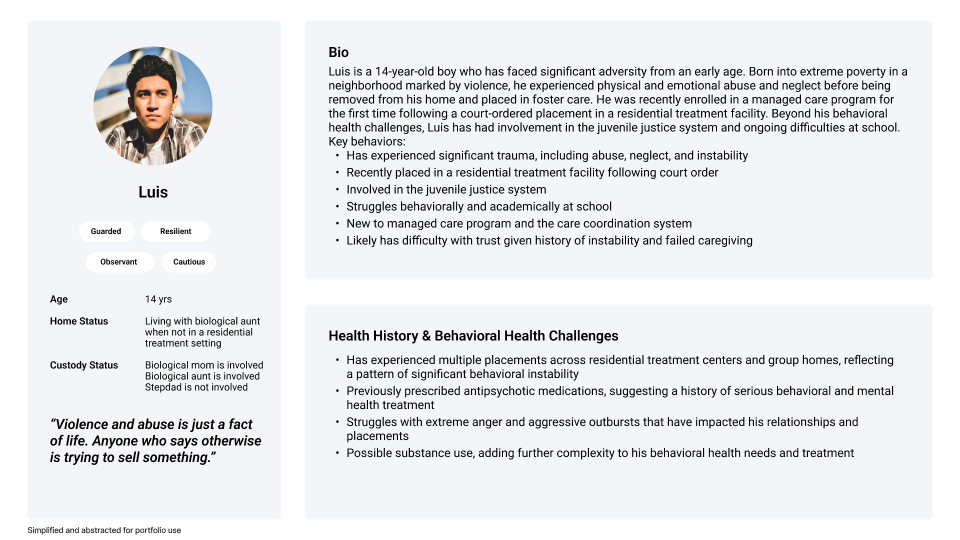
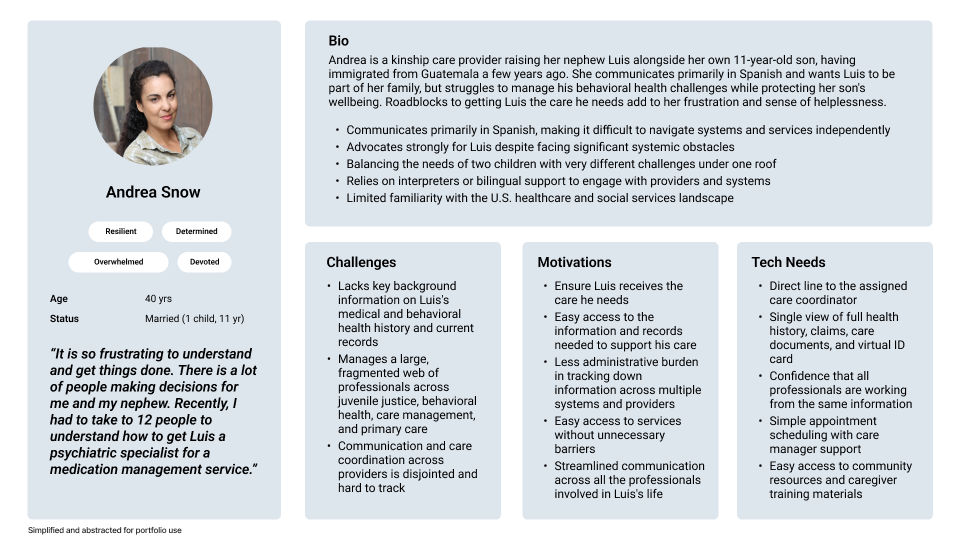
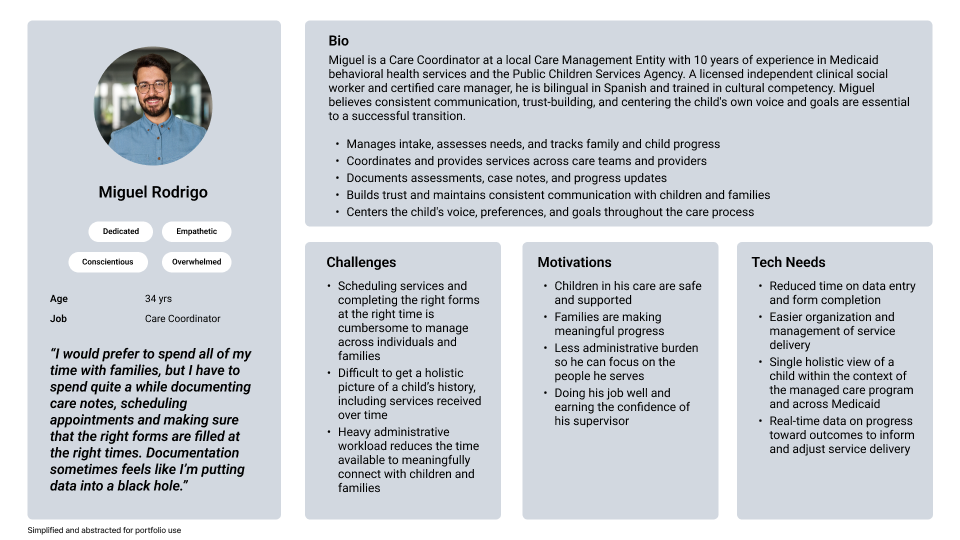
The organization committed to delivering a digital platform to support care coordination, communication, and visibility across multiple stakeholders, including care coordinators, guardians, state workers, and multidisciplinary care teams.
The challenge was not simply building a product. It was ensuring contractual commitments were translated into a coherent, user-centered experience aligned with operational realities.
System Complexity
The experience involved:
Contractual requirements with defined service commitments
Multiple stakeholder roles with distinct responsibilities
Interdependent business and technology workstreams
Tight timelines tied to state program launch
Ambiguity between contractual language and operational execution created the risk of fragmented product delivery and misaligned expectations.
Strategic Problem Framing
Rather than treating contractual features as isolated requirements, I focused on clarifying the intended end-to-end experience. Through structured workshops and collaborative working sessions, I:
Translated contractual commitments into user journey scenarios
Mapped stakeholder interactions across care coordination workflows
Identified gaps between existing capabilities and required services
Facilitated alignment on MVP scope and sequencing
This reframed the initiative from feature implementation to experience-driven delivery planning.
My Role
I partnered with business and technology stakeholders to:
Interpret contractual commitments through a user-centered lens
Facilitate cross-functional alignment on experience goals
Translate strategic intent into actionable design direction
Support delivery through wireframes, visual design guidance, and release collaboration
Outcomes
The initiative resulted in:
Clear articulation of the intended end-to-end digital experience
Cross-functional alignment on scope and priorities
Accelerated transition from strategic intent to actionable delivery
Successful release of a digital platform supporting complex care coordination
Long-Term Enablement
Beyond product launch, this work:
Strengthened collaboration between experience strategy and IT
Ensured sustained alignment between user needs, contractual obligations, and delivery decisions
The platform continues to serve children and families with complex needs and provides value beyond initial release.
Additional details can be discussed in conversation using anonymized examples.